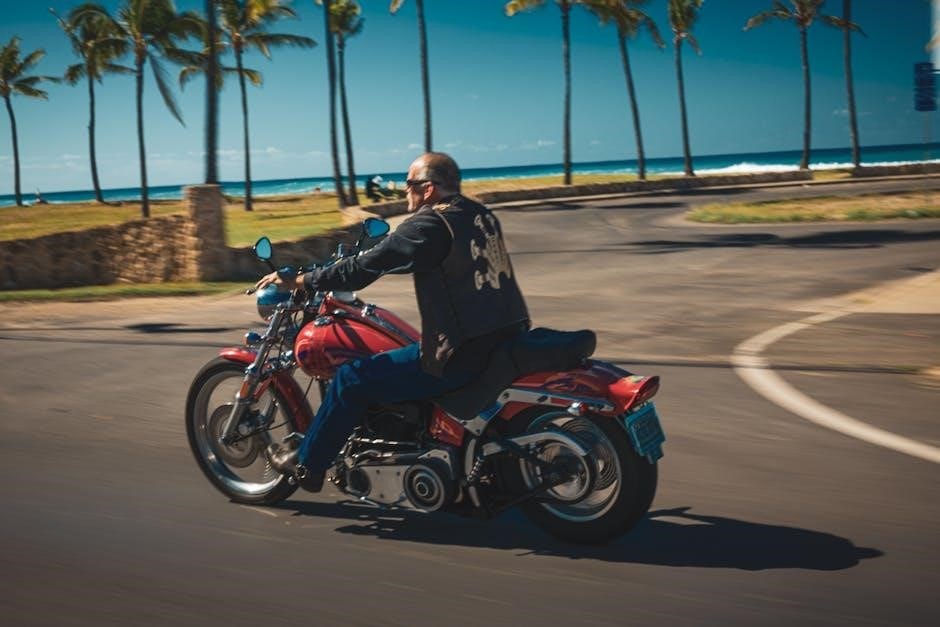
Navy Motorcycle Instruction: A Comprehensive Plan
This detailed instruction comprehensively covers Navy motorcycle safety, encompassing regulations, mandatory training, enrollment, and resources for all personnel.
The Navy prioritizes the safety of its personnel, recognizing the inherent risks associated with motorcycle operation, both on and off base. OPNAVINST 5100.12J mandates comprehensive motorcycle safety training for all military members and DoD civilians who choose to ride.
This proactive approach aims to equip riders with the necessary skills and knowledge to mitigate risks and enhance their overall competency; The program emphasizes continuous skill enhancement through refresher courses and adherence to established safety protocols. Ultimately, the goal is to reduce accidents and protect the lives of Navy motorcyclists.
II. Regulatory Framework: OPNAVINST 5100.12J
OPNAVINST 5100.12J serves as the foundational document governing motorcycle safety within the Navy. It explicitly requires all military personnel operating motorcycles, whether on or off base, and all DoD civilian personnel, to complete prescribed safety training. Specifically, Level I training is mandatory for all riders.
This instruction details requirements for motorcycle insurance and outlines the procedures for enrollment in safety courses via systems like ESAMS. It emphasizes the importance of maintaining a valid motorcycle endorsement obtained through the Department of Motor Vehicles (DMV) after completing the Basic Rider Course (BRC).
III. Mandatory Training Levels
The Navy’s motorcycle safety program utilizes a tiered training system to progressively enhance rider skills and knowledge. Level I, the Basic Rider Course (BRC), is compulsory for all military members and DoD civilians intending to operate a motorcycle. Successful completion of the BRC is a prerequisite for on-base riding privileges and often required for insurance purposes.
Following Level I, riders can advance to Level II (Intermediate Rider Course ― IRC) and Level III (Advanced Rider Course ౼ ARC) to further refine their techniques and risk management abilities. These courses build upon the foundational skills learned in the BRC, promoting continuous improvement and safer riding practices.
A. Level I – Basic Rider Course (BRC)
The Basic Rider Course (BRC) is the foundational requirement for all Navy personnel and DoD civilians planning to ride motorcycles, both on and off base. This course, often offered on or near naval installations, is fully funded by the Navy, making it accessible to all eligible riders. Participants are provided with a motorcycle for training, though they must supply their own Personal Protective Equipment (PPE).
Upon successful completion, riders receive a course completion card and are then responsible for obtaining a motorcycle endorsement from their state’s Department of Motor Vehicles (DMV).
B. Level II – Intermediate Rider Course (IRC)
The Intermediate Rider Course (IRC) builds upon the skills established in the Basic Rider Course, focusing on more advanced motorcycle handling techniques. This level is crucial for riders seeking to refine their abilities and enhance their overall safety. The IRC curriculum delves into complex maneuvers, hazard avoidance strategies, and cornering techniques, preparing riders for diverse riding conditions.
While details regarding specific course content weren’t explicitly provided, it’s understood the IRC aims to elevate rider competency beyond the foundational level, promoting confident and skillful operation.
C. Level III – Advanced Rider Course (ARC)
The Advanced Rider Course (ARC) represents the pinnacle of Navy motorcycle training, designed for experienced riders seeking mastery of advanced techniques. While specific curriculum details are limited in the provided information, the ARC likely focuses on precision riding, emergency maneuvers, and risk management in challenging scenarios.
This course aims to cultivate expert-level skills, enabling riders to confidently navigate complex road conditions and respond effectively to unexpected hazards. Completion of the ARC signifies a commitment to continuous skill enhancement and responsible motorcycle operation.
IV. Enrollment and Registration Process
Registering for Navy motorcycle safety courses involves a structured process utilizing several key systems. Personnel must utilize the Enterprise Safety and Management System (ESAMS) for initial scheduling, though the global registration system remains accessible even without unit authentication.
Unit Ground Safety Officers/Managers play a crucial role in validating enrollment requests. Seats are limited and fill rapidly, necessitating prompt registration. Following course completion, proper documentation is essential for obtaining a motorcycle endorsement and maintaining compliance with OPNAVINST 5100.12J.
A. Enterprise Safety and Management System (ESAMS)
The Enterprise Safety and Management System (ESAMS) serves as the primary platform for Navy personnel to initially schedule motorcycle safety training. It streamlines the enrollment process, allowing riders to view course availability and submit registration requests directly. However, it’s important to note that access and authentication through a Unit Ground Safety Officer/Manager are often required for complete processing.
ESAMS facilitates tracking of training completion and ensures compliance with mandatory safety regulations outlined in OPNAVINST 5100.12J. Despite ESAMS, the global registration system offers an alternative pathway.
B. Global Registration System
The Global Registration System provides an alternative avenue for registering for Navy motorcycle safety courses, even if a user’s account hasn’t yet been authenticated by their Unit Ground Safety Officer/Manager. This system offers broader access and can be particularly useful when ESAMS availability is limited or experiencing delays.
However, it’s crucial to understand that authentication is still generally required for full course access. Utilizing the Global Registration System allows individuals to proactively secure a spot, pending unit approval. Seats fill rapidly, making this a valuable option.
C. Unit Ground Safety Officer/Manager Authentication
Authentication by your Unit Ground Safety Officer (GSO) or Manager is a critical step in the Navy motorcycle safety training registration process. This verification confirms your eligibility and ensures your unit is aware of your participation in the program.
While the Global Registration System allows preliminary sign-up, final enrollment often hinges on GSO/Manager approval within the Enterprise Safety and Management System (ESAMS). This process streamlines safety oversight and resource allocation.
Promptly follow up with your GSO/Manager to expedite authentication and secure your course placement.
V. Course Details: Basic Rider Course (BRC)
The Basic Rider Course (BRC) is the foundational training requirement for all Navy personnel intending to operate a motorcycle, both on and off base. This course, offered on or near naval installations, provides essential skills and knowledge for safe motorcycle operation.
The Navy fully funds the BRC, making it accessible to all eligible riders. Participants are required to furnish their own Personal Protective Equipment (PPE), while the course provides the motorcycles for training purposes.
Successful completion is a prerequisite for obtaining a motorcycle endorsement from the Department of Motor Vehicles (DMV).
A. Curriculum Overview
The BRC curriculum is meticulously designed to introduce novice riders to the fundamentals of motorcycle control and safe riding practices. It encompasses classroom instruction covering motorcycle operation principles, risk management, and applicable traffic laws.
A significant portion of the course is dedicated to practical, hands-on riding exercises in a controlled environment. These exercises progressively build skills in clutch control, braking, turning, and hazard avoidance.
The overarching goal is to equip riders with the confidence and competence to navigate traffic safely and responsibly.
B. Motorcycle and PPE Provision

The Navy provides motorcycles for use during the Basic Rider Course (BRC), eliminating the need for students to bring their own machines for initial training. This ensures a standardized learning experience and allows focus on skill development.
However, participants are required to furnish their own Personal Protective Equipment (PPE). Essential PPE includes a DOT-approved helmet, eye protection, gloves, long-sleeved shirt or jacket, long pants, and sturdy footwear.
Proper PPE is crucial for rider safety and is non-negotiable for course participation.
C. DMV Endorsement Process
Successful completion of the Basic Rider Course (BRC) is a significant step towards obtaining a motorcycle endorsement on your driver’s license. Upon finishing the course, participants receive the necessary paperwork – typically a completion card – required by the Department of Motor Vehicles (DMV).
This card serves as proof of successful training and often waives the riding portion of the DMV’s motorcycle skills test. Riders must then present this documentation, along with standard DMV requirements, to receive their motorcycle endorsement.
VI. Advanced Training Opportunities

Beyond the foundational Basic Rider Course, the Navy offers Intermediate and Advanced Rider Courses to continually enhance rider skills and safety. The Intermediate Rider Course (IRC) builds upon BRC fundamentals, focusing on more complex maneuvers and hazard avoidance techniques;
The Advanced Rider Course (ARC) further refines these skills, emphasizing precision riding and advanced risk management strategies. These courses are crucial for riders seeking to improve competency and confidence, especially after purchasing a motorcycle, and are Navy-approved for skill enhancement.
A. Intermediate Rider Course (IRC) Focus
The Intermediate Rider Course (IRC) serves as a vital progression from the Basic Rider Course, concentrating on refining fundamental skills and introducing more challenging riding scenarios. This course emphasizes precise control, cornering techniques, and effective hazard perception.
Riders will practice advanced braking maneuvers and learn strategies for navigating complex traffic situations. The IRC aims to build confidence and competency in handling a motorcycle under varied conditions, preparing riders for more demanding riding environments and promoting safe riding habits.
B. Advanced Rider Course (ARC) Focus
The Advanced Rider Course (ARC) represents the pinnacle of Navy motorcycle training, designed for experienced riders seeking to hone their skills to an expert level. This course delves into advanced motorcycle dynamics, focusing on precision riding techniques and strategic risk management.
Riders will encounter challenging exercises that test their ability to react to unexpected situations and maintain control in adverse conditions. The ARC emphasizes proactive riding strategies, promoting a heightened awareness of potential hazards and fostering a commitment to continuous skill enhancement for optimal safety.
VII. Financial Assistance and Course Costs
The Navy demonstrates a strong commitment to motorcycle rider safety by fully funding the Basic Rider Course (BRC) for all eligible personnel. This includes active duty service members, their dependents, reservists, National Guard members, and Department of Defense civilians.
There are no out-of-pocket costs associated with the BRC itself, removing financial barriers to essential safety training. While the Navy covers the course fees, riders are responsible for providing their own Personal Protective Equipment (PPE). Subsequent, advanced courses may have associated costs, details of which will be provided during registration.
VIII. Eligibility for Training
Navy motorcycle safety training, specifically the Basic Rider Course (BRC), is available to a broad range of individuals. Active duty personnel are required to complete Level I training if they operate a motorcycle on or off base, as per OPNAVINST 5100.12J.
Eligibility extends to their dependents, reservists, National Guard members, and DoD civilians. This inclusive approach ensures comprehensive safety education across the entire Navy community. All personnel intending to ride motorcycles are strongly encouraged to participate, prioritizing safe riding practices and adherence to regulatory requirements.
A. Active Duty Personnel
All active duty Navy personnel operating a motorcycle, whether on or off a military installation, are mandated to complete the Level I – Basic Rider Course (BRC). This requirement is outlined in OPNAVINST 5100.12J, emphasizing the Navy’s commitment to rider safety.
Completion of the BRC is not merely recommended, but a regulatory necessity. The Navy funds this crucial training, providing a significant benefit to its personnel. Adherence to this policy ensures all active duty riders possess foundational skills and knowledge for safe motorcycle operation.
B. Dependents
Dependents of active duty personnel also benefit from the Navy’s motorcycle safety program, with access to the same free training opportunities as service members. They are eligible to participate in the Level I – Basic Rider Course (BRC), ensuring they too receive foundational motorcycle operation instruction.
This inclusive approach extends the safety net beyond the active duty force, recognizing the importance of equipping all riders with essential skills. Like active duty, dependent participation is strongly encouraged and supports a culture of motorcycle safety within Navy families.
C. Reservists, National Guard, and DoD Civilians
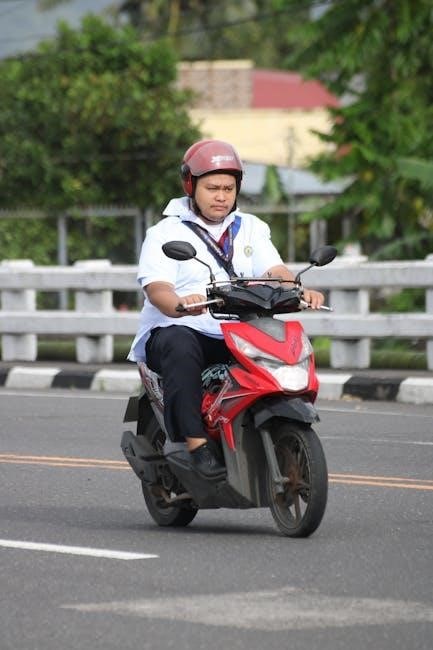
Reservists, National Guard members, and Department of Defense (DoD) civilian personnel are equally eligible for the Navy’s comprehensive motorcycle safety training. Access to the free Basic Rider Course (BRC) and subsequent levels is available, reinforcing a commitment to safety across all affiliated groups.
This inclusivity ensures a consistent safety standard, regardless of employment status. Participation is governed by OPNAVINST 5100.12J, requiring completion of Level I training for all motorcycle operators on or off base, promoting responsible riding practices throughout the DoD community.
IX. Motorcycle Safety Resources

The Naval Safety Command provides crucial resources to enhance rider knowledge and prevent accidents. Regularly updated Motorcycle Rider Down Reports offer valuable insights into incident causes, promoting proactive safety measures.
Naval Safety Command Newsletters disseminate vital information on best practices and emerging threats. Furthermore, the annual 101 Critical Days of Summer presentations emphasize seasonal riding hazards and risk mitigation strategies.
These resources, readily available to all personnel, are integral to fostering a culture of motorcycle safety within the Navy and DoD communities.
A. Naval Safety Command Motorcycle Rider Down Reports
The Naval Safety Command’s Motorcycle Rider Down Reports are essential analytical tools for understanding motorcycle mishap trends. These reports meticulously document incidents, identifying contributing factors such as rider experience, road conditions, and vehicle defects.
Analyzing these reports allows riders and safety personnel to learn from past mistakes and implement preventative measures. The detailed information provided promotes a proactive safety culture, reducing the likelihood of future accidents.
Accessing and reviewing these reports is strongly encouraged for all Navy motorcyclists.
B. Naval Safety Command Newsletters
Naval Safety Command Newsletters serve as a vital communication channel for disseminating current motorcycle safety information to the fleet. These publications feature articles on best practices, emerging hazards, and lessons learned from recent incidents.
They often highlight seasonal riding concerns, such as those addressed during the “101 Critical Days of Summer” campaign, and provide updates on regulatory changes. Regularly reviewing these newsletters keeps riders informed and reinforces safe riding habits.
Access to these resources is readily available online.
C. 101 Critical Days of Summer Presentations
The “101 Critical Days of Summer” presentations are a cornerstone of the Navy’s motorcycle safety program, focusing on increased risks during warmer months. These presentations emphasize proactive risk management and highlight common accident factors, such as speeding and inexperience.
They provide riders with practical strategies to mitigate hazards and promote safe riding behaviors throughout the high-risk period. Information regarding motorcycle safety is often included in these presentations.

These briefings are typically conducted annually and are accessible to all personnel.
X. Insurance Requirements
According to Navy regulations, specifically OPNAVINST 5100.12J, all military motorcycle riders are legally required to maintain valid motorcycle insurance. This insurance must meet or exceed the minimum liability coverage requirements stipulated by the state in which the motorcycle is registered.
Proof of insurance is essential for on-base driving privileges and may be requested during safety inspections or audits. Failure to maintain valid insurance can result in disciplinary action and restriction of riding privileges.
Ensure your policy is current and provides adequate coverage.
XI. Refresher Training and Skill Enhancement
While the Basic Rider Course (BRC) card doesn’t expire, continuous skill enhancement is strongly encouraged and considered vital for all Navy motorcycle riders. The Naval Safety Center advocates for ongoing training to maintain competency and adapt to evolving road conditions and riding techniques.
Riders should actively seek out and complete refresher courses, such as the Intermediate Rider Course (IRC) and Advanced Rider Course (ARC), to sharpen skills. These courses provide advanced techniques and risk management strategies.

XII. On-Base Driving Privileges for Civilians
All civilian personnel desiring on-base driving privileges, including retirees, must adhere to specific requirements outlined in Navy regulations, specifically OPNAVINST 5100.12J. Motorcycle operation necessitates completion of Level I training – the Basic Rider Course (BRC) – and possessing valid motorcycle insurance.
Registration for the BRC can be initiated through the Enterprise Safety and Management System (ESAMS) or the global registration system, even without immediate unit authentication. Compliance ensures safe operation and access to Navy installations.
XIII. Course Availability and Scheduling
Information regarding motorcycle safety course availability and the current class schedule can be found online through designated registration portals. Be advised that open seats are exceptionally limited and tend to fill rapidly, necessitating prompt registration.
Individuals can register for courses, including the Basic Rider Course (BRC), through the global registration system, even if their account hasn’t yet been authenticated by their Unit Ground Safety Officer or Manager. Proactive monitoring of the schedule is crucial for securing a spot.
XIV. Importance of Personal Protective Equipment (PPE)
Proper Personal Protective Equipment (PPE) is absolutely critical for motorcycle rider safety and is a non-negotiable aspect of Navy motorcycle instruction. While the Navy provides the motorcycle for the Basic Rider Course (BRC), riders are responsible for supplying their own appropriate PPE.
This includes a DOT-approved helmet, eye protection, full-fingered gloves, long-sleeved shirt or jacket, long pants, and sturdy footwear. Wearing adequate PPE significantly reduces the risk of injury in the event of an accident, safeguarding riders during training and beyond.
XV. Motorcycle Inspection Checklist
A thorough pre-ride motorcycle inspection is paramount for safe operation, a key component emphasized within Navy motorcycle instruction. Riders must consistently check critical components before each ride, ensuring optimal functionality and minimizing potential hazards.
This includes inspecting tires (pressure and tread), controls (levers and cables), fluids (oil, coolant, brake fluid), lights, brakes, and the chain or belt. Regular inspections identify potential mechanical issues early, preventing accidents and promoting responsible motorcycle operation, aligning with Navy safety standards.
XVI. Risk Management Strategies for Riders
Navy motorcycle instruction heavily emphasizes proactive risk management for riders. This involves constant hazard assessment, recognizing potential dangers like road conditions, traffic patterns, and weather. Riders must employ defensive driving techniques, maintaining a safe following distance and scanning for potential threats.
Furthermore, riders should avoid distractions, ride within their skill level, and always wear appropriate Personal Protective Equipment (PPE). Continuous self-assessment and a commitment to safe riding practices are crucial for mitigating risks and ensuring a secure journey, upholding Navy safety protocols.
XVII. Common Motorcycle Accidents and Prevention
Navy motorcycle instruction highlights common accident causes, frequently involving left-turn collisions from other vehicles and speed-related incidents. Road hazards like gravel, potholes, and unexpected obstacles also contribute significantly. Prevention centers on increased rider visibility – wearing bright clothing and utilizing headlights – and maintaining situational awareness.
Riders are taught to anticipate potential hazards, practice emergency braking, and avoid riding in another vehicle’s blind spot. Consistent skill enhancement through refresher courses and adherence to safe riding practices are vital for minimizing accident risks and promoting rider safety.
XVIII. Legal Considerations for Motorcycle Operation
Navy motorcycle instruction emphasizes adherence to all applicable federal, state, and local traffic laws. Operating a motorcycle requires a valid driver’s license with a motorcycle endorsement, obtained through successful completion of the Basic Rider Course (BRC) and a DMV skills test.
Regulations, like OPNAVINST 5100.12J, mandate completion of Level I training for all military riders. Valid motorcycle insurance is also a non-negotiable requirement for on and off-base operation. Failure to comply with these legal stipulations can result in disciplinary action and loss of riding privileges.
XIX. Post-Course Requirements and Documentation
Upon completing the Basic Rider Course (BRC), riders must submit the course completion paperwork to the Department of Motor Vehicles (DMV) to obtain their motorcycle endorsement. Maintaining a copy of the BRC card is crucial for personal records, though the card itself doesn’t expire.
However, continuous skill enhancement through refresher training is strongly encouraged. Documentation of completed training, insurance validity, and a valid license must be readily available. Unit Ground Safety Officers may require periodic verification of compliance with Navy motorcycle instruction regulations.
XX. Updates to Regulations and Training
The Naval Safety Command continually reviews and updates motorcycle safety regulations, currently outlined in OPNAVINST 5100.12J (and potentially newer iterations like 5100.12H). Riders are responsible for staying informed about these changes, which may impact training requirements or operational procedures.
Updates are often disseminated through Naval Safety Command newsletters, 101 Critical Days of Summer presentations, and official Navy channels. Training curricula are also periodically revised to incorporate best practices and address emerging safety concerns, ensuring riders receive the most current instruction.
XXI. Contact Information for Motorcycle Safety Programs
For detailed information regarding Navy motorcycle safety programs, personnel should first consult their Unit Ground Safety Officer/Manager. Additionally, the Naval Safety Command serves as a central resource, offering guidance and updates on regulations and training opportunities.
Specific contact details and program information can be found on the Naval Safety Command website. Further assistance regarding course registration and scheduling is available through the Enterprise Safety and Management System (ESAMS) and the Global Registration System. These platforms provide access to local course offerings.
XXII. Frequently Asked Questions (FAQ)
Q: Is motorcycle safety training mandatory? A: Yes, OPNAVINST 5100.12J requires all military personnel and DoD civilians operating motorcycles to complete Level I training.
Q: Is the Basic Rider Course (BRC) free? A: Yes, the Navy covers the cost of the BRC for eligible personnel. Q: Do I need my own motorcycle for the BRC? A: No, the course provides motorcycles for student use.
Q: Does the BRC card expire? A: No, but refresher training is strongly encouraged to maintain skills and competency.